 Author :

The main purpose of a digital credential software is to issue secure, verifiable credentials, which is the key differentiating factor between a digital credential and traditional paper or PDF certificates. So security is an integral part of a digital credential software and shouldn’t be overlooked at any cost.
Hence, you should ensure that your digital credential software has these six features to avoid any risk of data breach, forgery or tampering.
Six Must-Have Features in a Digital Credential Software
Cryptographic Protection
When it comes to security, the first thing to safeguard is the credential itself. So, it is important to ensure that the digital credential software features strong security methods for credentials. Let’s say you need to generate a diploma certificate for a student, then it should be encrypted with a private key to maintain the authenticity of the certificate.
Think of it as handing a suitcase to the recipient, which has the credential pasted on the top. So the recipient can share the suitcase with anyone to show that they hold this certificate. But the suitcase itself has a private lock on it, which only you can unlock.
So, if an HR needs to verify the authenticity of the certificate, they can send it to you. Now, if the lock on the suitcase unlocks with your private key, it simply states that the certificate is indeed authentic.
In technical terms, this encryption is known as an asymmetric encryption algorithm or public-private key encryption.
W3C & Open Badge 3.0 Compliance
Just like any other industry, the digital credentialing industry is also surrounded by multiple standards, like W3C and Open Badge 3.0. So, when you are looking for a digital credential software, you should make sure that the platform complies with these standards.
What is W3C?
W3C or World Wide Web Consortium creates the worldwide standards for the web content’s security and interoperability. In simple terms, it allows anyone to verify the authenticity of credentials without compromising the personal information of the recipient.
What is Open Badges 3.0?
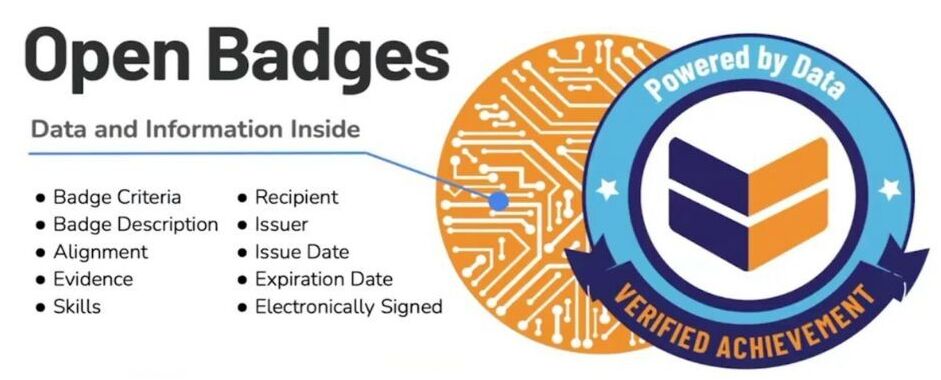
Open Badges 3.0 is a modern standard for digital badges developed by the 1EdTech Consortium. It is based on W3C standards, with which you can issue cryptographically signed and easily verifiable digital credentials.
This standard ensures that any digital credential is cryptographically signed and contains predefined metadata before issuance. Once issued, the critical information remains safe in the digital wallet of the recipient.
Secure Hosting and Data Protection
Now, issuing, managing and saving digital credentials involves the data of multiple parties, which you would never want to be compromised. That’s why secure hosting and compliance with the data protection standards are a must when choosing a digital credential software. But how do you know if you are with the right service provider in terms of data security? The answer is to look for these compliances:
- ISO 27001 (International Standard for Information Security)
- ISO 9001 (International Standard for Quality Management)
- Data Encryption technologies like AES-256 and HTTPS (TLS encryption)
- Compliance with GDPR, FERPA and other global data protection standards
These technologies and compliances are the gold standards for data security and quality management, showing the capability of the digital credential software provider to keep your and the awardees’ data secured.
Integrations
You are likely already working with multiple workflow management tools like a Learning Management System (LMS), CRM, HR Management Software or may introduce them in the near future. It means you need a digital credential software that can integrate with these already existing systems easily.
Easy integrations ensure that the data can seamlessly be transferred from other tools to the credential management software with minimal human intervention and complete security. So, a tool like CertifyMe can be a good choice as it supports seamless integration with over a hundred workflow tools.
Ease of Automation
When implementing a digital credential software into your organisation, automation is one of those features that not only ensures security but also sheds the workload. For instance, if you need to issue hundreds of thousands of certificates every day or on a specific day, it can be very overwhelming for any human and can increase the chances of error.
On the other hand, a digital credential software can automatically fetch data from a CSV file and not only create the certificate but can also send it to the recipients in a timely manner, without any human intervention.
Custom Wallet
Last but not least, a custom wallet is an outstanding feature from both security and branding perspectives. A wallet is a dedicated space for the recipient to keep all their certificates, badges and transcripts all in a single place. The wallet is protected with a password generated by the recipient so that no one else can have access to it. On the other hand, it remains temper-proof as the blockchain ledger allows for verifiability.
Conclusion
To sum up, these are the core features you should look for in a secure digital credentialing platform, especially if you’re operating at an enterprise scale. Keeping this checklist in mind can help you choose a tool that’s not only secure but also scalable and reliable.
If you’re exploring platforms that meet these standards, CertifyMe is one worth considering. You can set up a free account in just a few seconds and explore to see if it aligns with your needs. If your organisation is planning to implement a more advanced digital credentialing system, you can contact our team and request a demo, as well as custom pricing options that fit your requirements.