Transcript
- Courses and modules
- Grades and academic progress
- Qualifications awarded
A record that travels with the learner
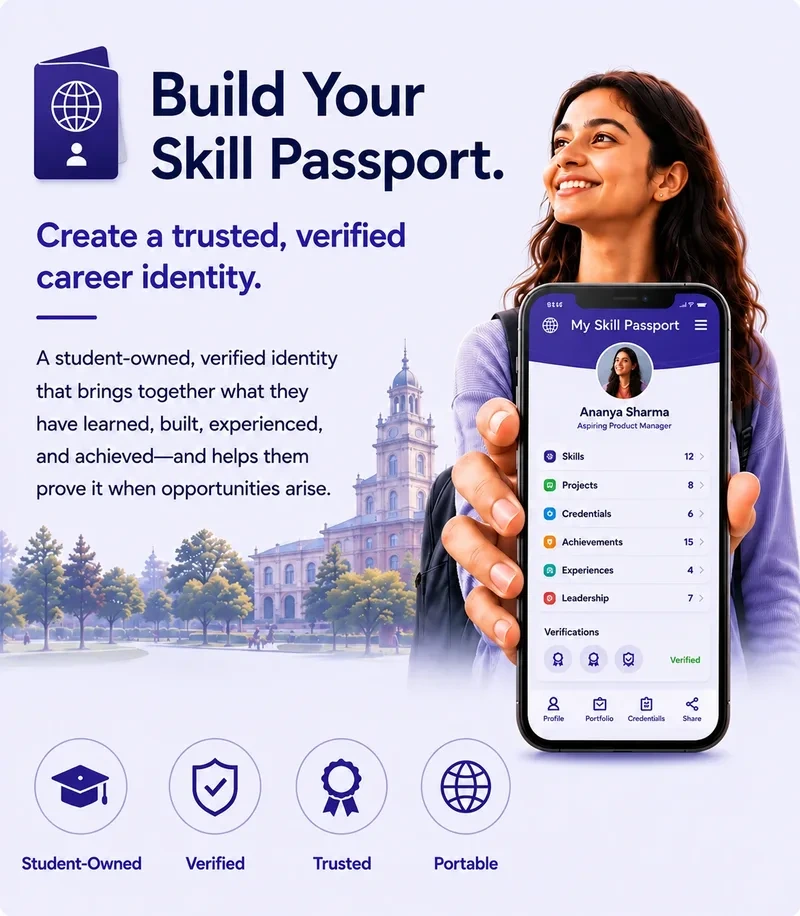
Bring credentials, verified skills, projects, experiences and achievements together into a learner-controlled record that can be carried and shared beyond the institution.
Institutions issue and attest. Learners curate, carry and share.
01 · The learner-facing record
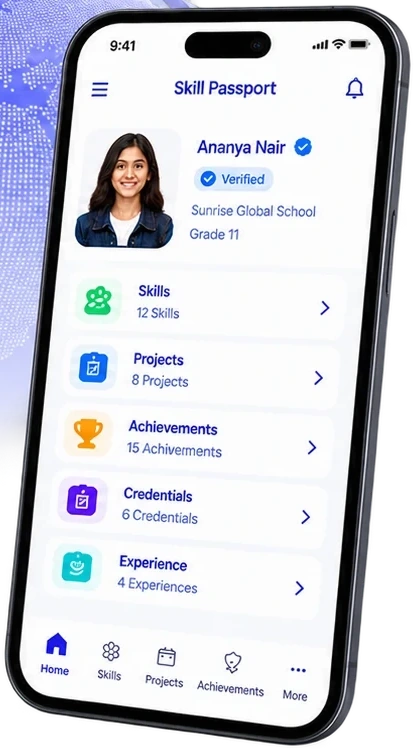
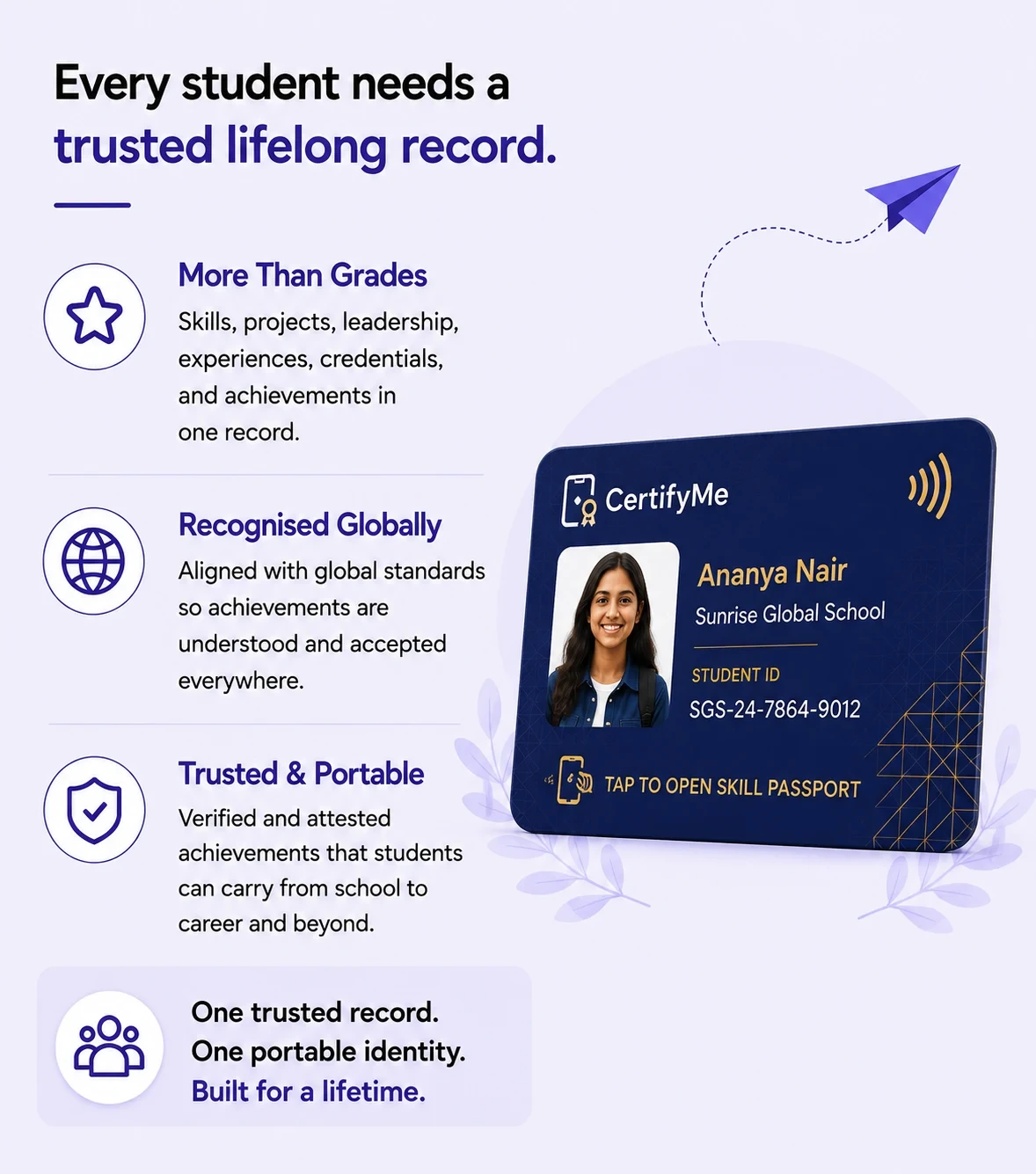
A Skill Passport brings learning and achievement into one connected record the learner can carry forward. It makes room for institution-issued credentials alongside skills, projects, experiences and learner-added evidence—without losing the source or status of each item.
The institution recognises achievement. The learner makes it part of a continuing story.
One achievement, awarded by an issuer.
A connected, structured record of learning and achievement.
The learner-facing, portable expression of that record—ready to carry, present and share.
Three related ideas. Three distinct roles.
02 · More of the learner story
A transcript remains the academic record. A Skill Passport adds context around learning and achievement, so the learner can present more than courses and grades.
The two records have different jobs. A Skill Passport can bring academic and broader evidence into a learner-controlled view.
03 · From award to audience
An institution-issued achievement becomes part of a connected learner record. The learner then chooses how to present and share it.
04 · Explore the record
Move through the parts of a Skill Passport. Each item keeps its source, and verification applies to that item—not automatically to everything in the record.
Digital certificates and badges record achievements awarded by an institution. Their source remains visible as the learner brings them into a wider record.
Institution-issuedIssued by the awarding institution
Verification is specific to the credential and its issuer.
Skills help explain what learning represents. Each skill is shown with the achievement or evidence that supports it, whether institution-issued, learner-added or attested.
Source-linkedShown with its supporting achievement or context
Each supporting item carries its own source and verification status.
Research, designs, software, publications and other work let learners show how they applied what they learned. A project can include its own supporting evidence.
Learner-addedAdded and described by the learner
Learner-added work remains identified as learner-added unless separately attested.
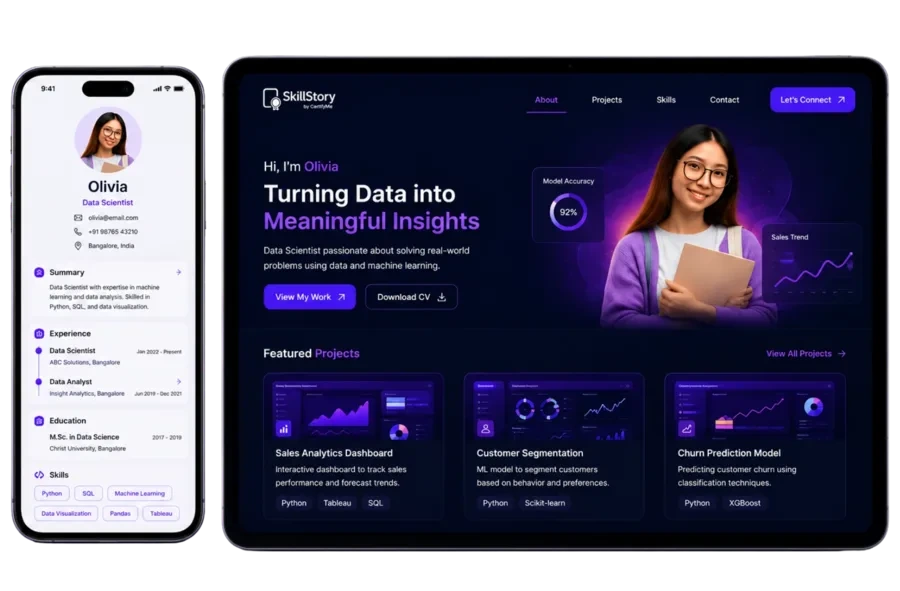
Internships, volunteering, leadership and other meaningful activity can make a record more complete. The learner can describe the experience and add material that supports it.
Learner-addedSource and supporting material stay visible
An experience is not institution-verified simply because it appears in the passport.
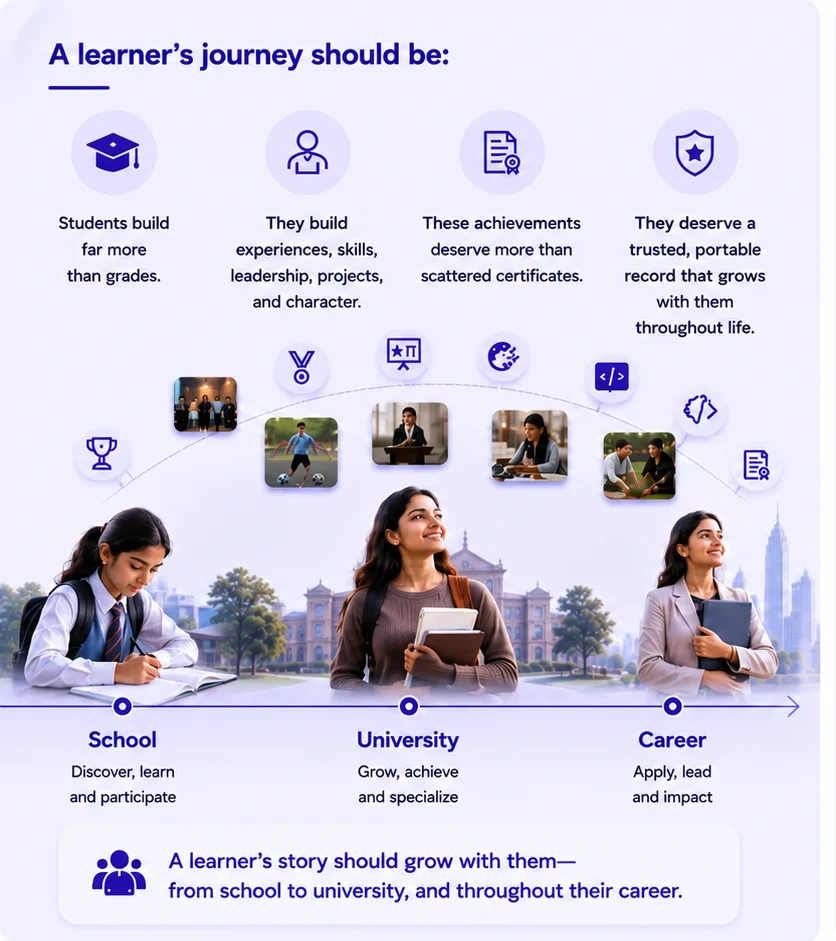
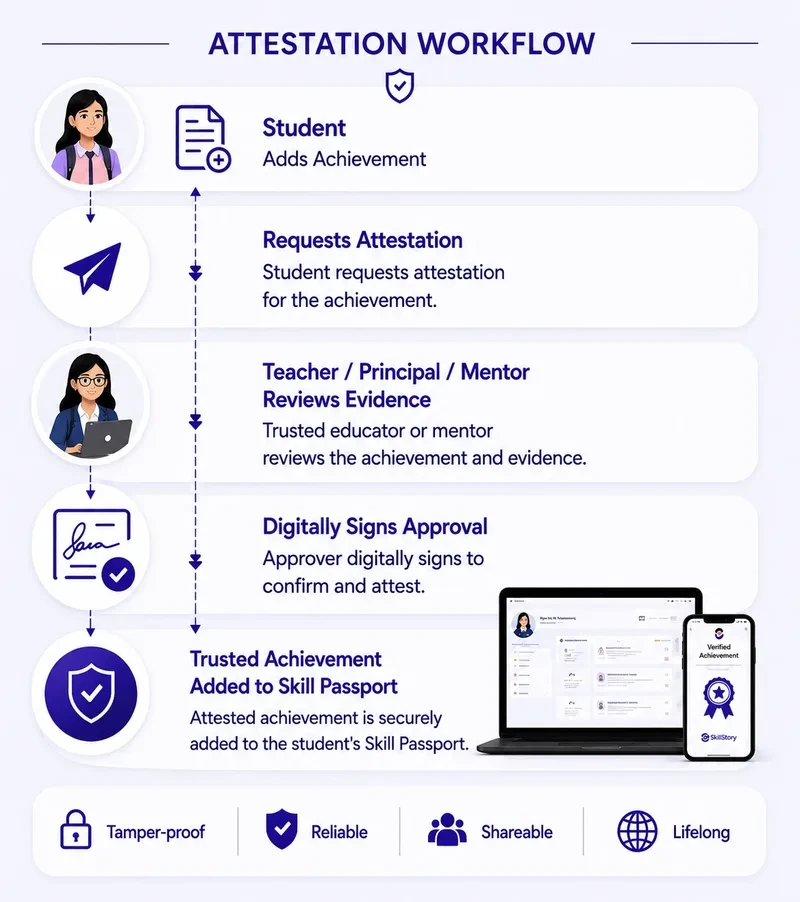
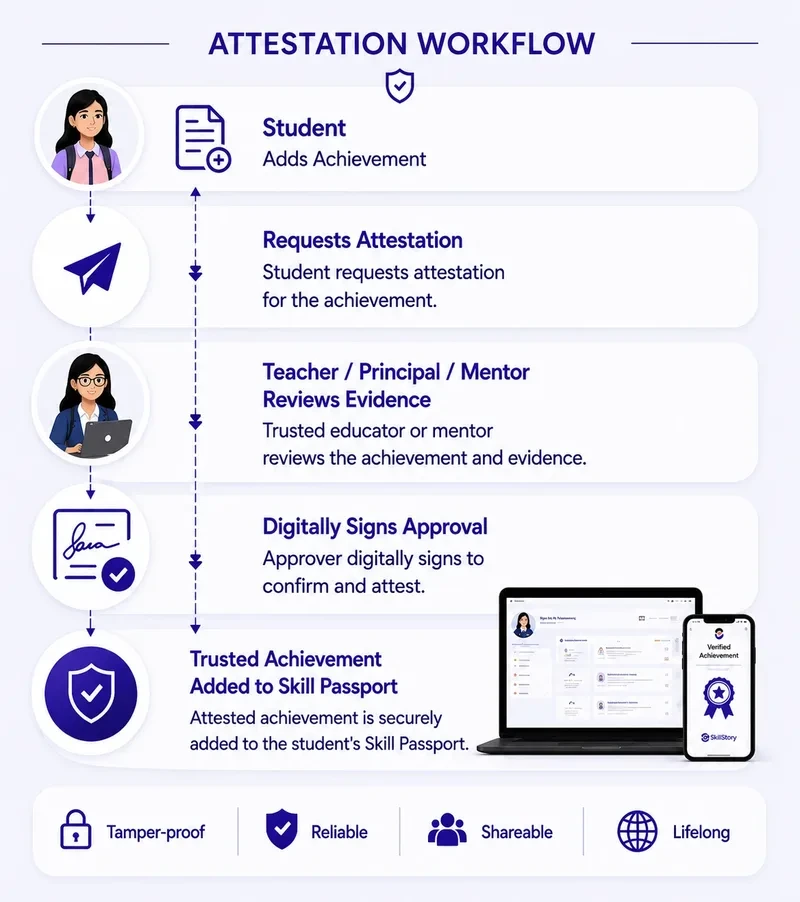
A learner can record an achievement and request an educator or mentor to attest to it. The attestor reviews the submitted achievement and supporting evidence before confirming it.
AttestedConfirmed by an identified attestor
Attestation applies to the reviewed achievement and its evidence, not the entire passport.
Documents, links and outputs can support credentials, skills, projects or experiences. The source stays attached to the item so a recipient can understand what is being presented.
Source retainedEvidence may be learner-added or issuer-provided
Evidence can support verification; it does not make every connected item verified automatically.
Source and verification are item-level. Learners can add to the record without changing an item's issuer or verification status.
05 · Capabilities connected to learning
Skills add meaning to what a credential represents. They can be connected to a programme, assessment or other supporting context, helping the learner explain capabilities alongside the achievement.
A skill's source and verification status remain tied to the evidence supporting that item.
06 · Work and what supports it
Projects may include research, design, software, publications, community work or internship outcomes. Supporting links, documents and outputs add context while keeping the source of each item visible.
Learners can add project evidence. It is not institution-verified unless an institution separately issues or attests to it.
07 · Attested achievement
Learners can add an achievement and supporting evidence, then ask an educator or mentor to review it. If approved, the attestation records who confirmed that achievement and when.
08 · A chosen view for each audience
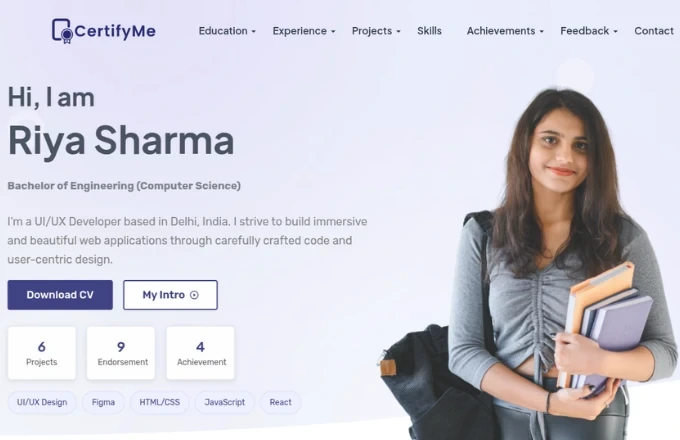
A learner can select relevant credentials, skills, projects and experiences to shape a portfolio or CV for a particular purpose. The Skill Passport is the connected record; the CV and portfolio are ways to present selected parts of it.
The learner decides what to present. Each item keeps its own source and verification status.
09 · Trust at the level of each item
A recipient can inspect the source and verification context of a credential or attested achievement. Institution-issued credentials retain their issuer; learner-added entries remain learner-added unless a separate review attests them.
Institution-issued · issued by its named institution
Learner-added · provided by the learner
Attested · reviewed and confirmed by an attestor
Verification is item-level. Adding an item does not make it institution-verified.
SkillStory is the learner-facing Skill Passport experience that supports this CertifyMe solution.
10 · Learning continues
A learner's record can grow through school, higher education, further learning and work. Credentials keep their original issuer, while new skills, projects, experiences and achievements can join the story over time.
The learner carries the record forward and chooses what to share.
11 · Learning in a work context
Credentials, skills, projects and experiences help learners present their capabilities in context. Institutions can connect that learner-facing story with workforce context as part of a broader pathway from learning to work.
Credentials, skills, projects and attested achievements
Occupation, role and skills context for a wider conversation
12 · Value beyond the learner
When learners can carry and present a richer record, institutions can extend the context around their credentials and maintain a meaningful connection to learner achievement.
Bring an institutional award into a record that can also include skills, projects and experiences.
Support a learner relationship that can continue beyond a single course or graduation point.
Help learners select and share relevant parts of their achievement story with others.
Questions, answered
A Skill Passport is the learner-facing, portable expression of a connected achievement record. It brings credentials, skills, projects, experiences and achievements into a record the learner can present and share, with each item's source and verification context retained.
A certificate represents one achievement. A Comprehensive Learner Record connects achievements in a structured record. The Skill Passport is the learner-facing expression of that record, supporting presentation through a portfolio, CV or application.
No. The academic transcript remains the institution's authoritative academic record. A Skill Passport supports a broader presentation of credentials, skills, projects and experiences alongside that transcript.
No. Institution-issued evidence, learner-added evidence and attested evidence remain distinct. Issued credentials retain their issuer context; learner additions remain learner contributions; attestations identify who reviewed or supported a particular item. Verification applies at item level.
Learners can connect credentials, skills, projects, experiences, achievements and supporting evidence. Items retain their source, with institution-issued achievements, learner contributions and attested evidence represented according to their own verification context.
Learners can use their connected record in a portfolio, CV or application and share relevant achievements with employers, institutions and verifiers through the supported presentation and sharing options. The evidence remains connected to its source and applicable verification resources.
An attestation records a named educator's, mentor's or other attester's review of a specific achievement or evidence item. Its meaning follows the attester's role and the scope of that review; it does not automatically turn every learner contribution into an institution-issued credential.
A Skill Passport is designed to grow across education, projects, work and continuing learning. Learners can carry and present their connected record beyond a single programme, while individual records retain their issuer context, access conditions and verification resources.
13 · Keep achievement moving
Give learners a connected record they can carry, shape and share—while each achievement keeps its source and meaning.